Implant dentistry can restore function and confidence, but complications in implant dentistry do occur. This guide explains the common risks, warning signs, and practical steps to prevent or treat problems. Read on to learn how early recognition, smart planning, and prompt care make most issues manageable and how to know when to seek expert help.
Common complications in implant dentistry
Many patients face a handful of frequent issues after implant placement. Early recognition matters because timely care can save the implant, reduce bone loss, and limit pain. Below are the leading problems to watch for.
Peri-implantitis (infection and inflammation)
Look for bleeding gums, swelling, bad taste, and gradual bone loss. Peri-implantitis is the top biological cause of implant failure.
Implant failure / non-integration
Early failure shows pain and loosening soon after surgery; late failure can happen years later. Causes include poor bone, infection, and excessive load.
Nerve injury or altered sensation
Numbness, tingling, or sharp pain can indicate nerve trauma. Many cases improve, but persistent symptoms need referral and testing.
Sinus complications
Upper-jaw implants can perforate the sinus membrane or trigger sinusitis. Symptoms include congestion, drainage, or recurring sinus infections.
Prosthetic and mechanical issues
Loose screws, fractured crowns, or bite problems cause pain or instability and can mimic implant failure if not checked.
How complications are diagnosed
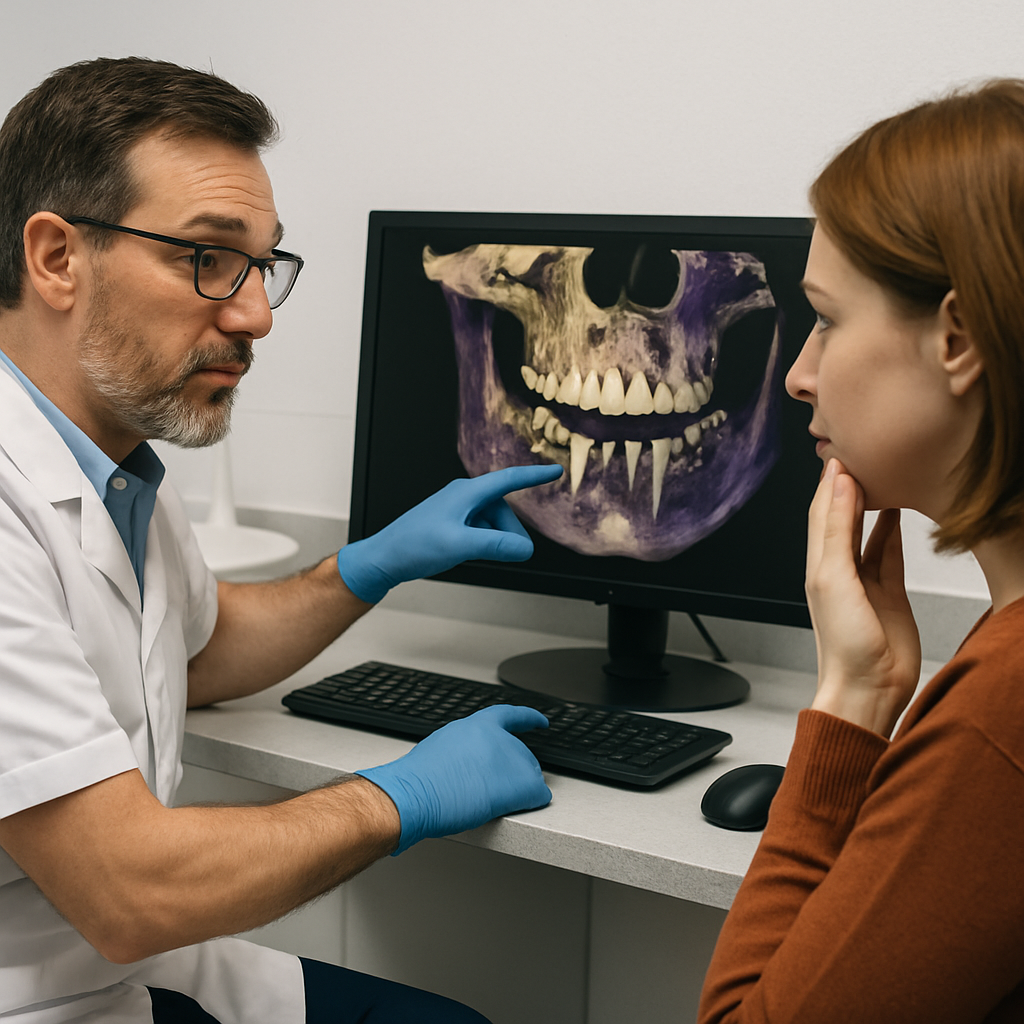
Diagnosis starts with a full clinical exam and detailed patient history. Key imaging includes digital X-rays and CBCT scans for 3D views of bone and nerve locations. Intra-oral cameras help track soft-tissue changes. These tools reveal bone loss, implant position errors, and early infection so treatment can start sooner and be more predictable.
Preventing complications in implant dentistry
Prevention begins before surgery: control diabetes, stop smoking, and treat active gum disease. Good planning uses CBCT scans, surgical guides, and staged grafting when bone is thin. Sterile technique and clear post-op instructions cut infection risk. Long-term, schedule regular cleanings and implant maintenance visits to prevent peri-implant disease.
Treatment options when complications occur
Early infections often respond to antibiotics and local cleaning. Significant peri-implantitis may need surgical access, decontamination, and bone grafting or removal of the implant. Nerve injuries require evaluation and sometimes referral to a specialist. Sinus membrane problems can need repair by an ENT or oral surgeon. Mechanical failures are fixed by adjusting or remaking the prosthesis; severe cases may require explantation and delayed replacement.
Questions patients should ask about implant risks and care
– What are my personal risk factors for complications? – Will you use CBCT and a surgical guide for my case? – What signs should prompt an emergency visit? – How often should I have implant maintenance visits? – What are my options if an implant fails?
Finding experienced care: a brief note about provider selection
Look for providers with strong implant experience, full-arch work, and modern tech like CBCT, iTero, lasers, and in-house 3D printing for surgical guides. Clear communication about risks and finance options matters. Broadway Smile Boutique and Dr. David Shirinian in Glendale offer these technologies and concierge-style care as an example of this approach.
Closing — next steps and gentle CTA
Most complications in implant dentistry are preventable or treatable if caught early. Use the questions above at your consult, ask for CBCT planning, and schedule an evaluation if you notice pain, swelling, or looseness. A prompt visit creates the best chance for a predictable outcome.